Ridge: MagSafe Launch & Consumer Tech Expansion
How I leveraged 15 years of category expertise to build Ridge's product marketing function, launch their MagSafe collection into a skeptical tech audience, and earn a seat at the table to lead their consumer tech growth strategy.
Category
Product Education & GTM Strategy
Disciplines
Product Positioning, Messaging, Market Research, Content Strategy, Cross-functional Leadership, Product Education
Client
Ridge
Year
2024 - 2025
Context
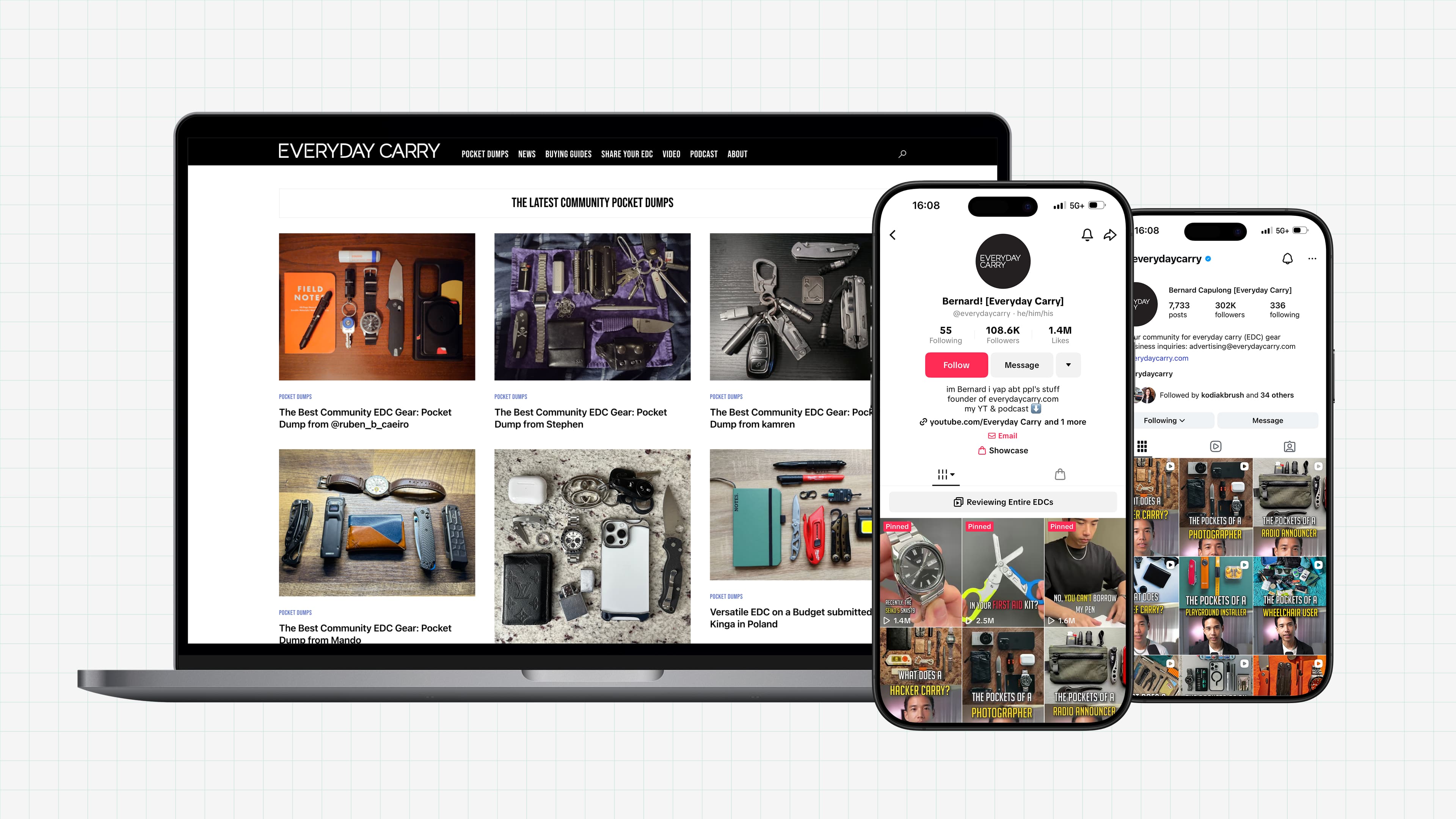
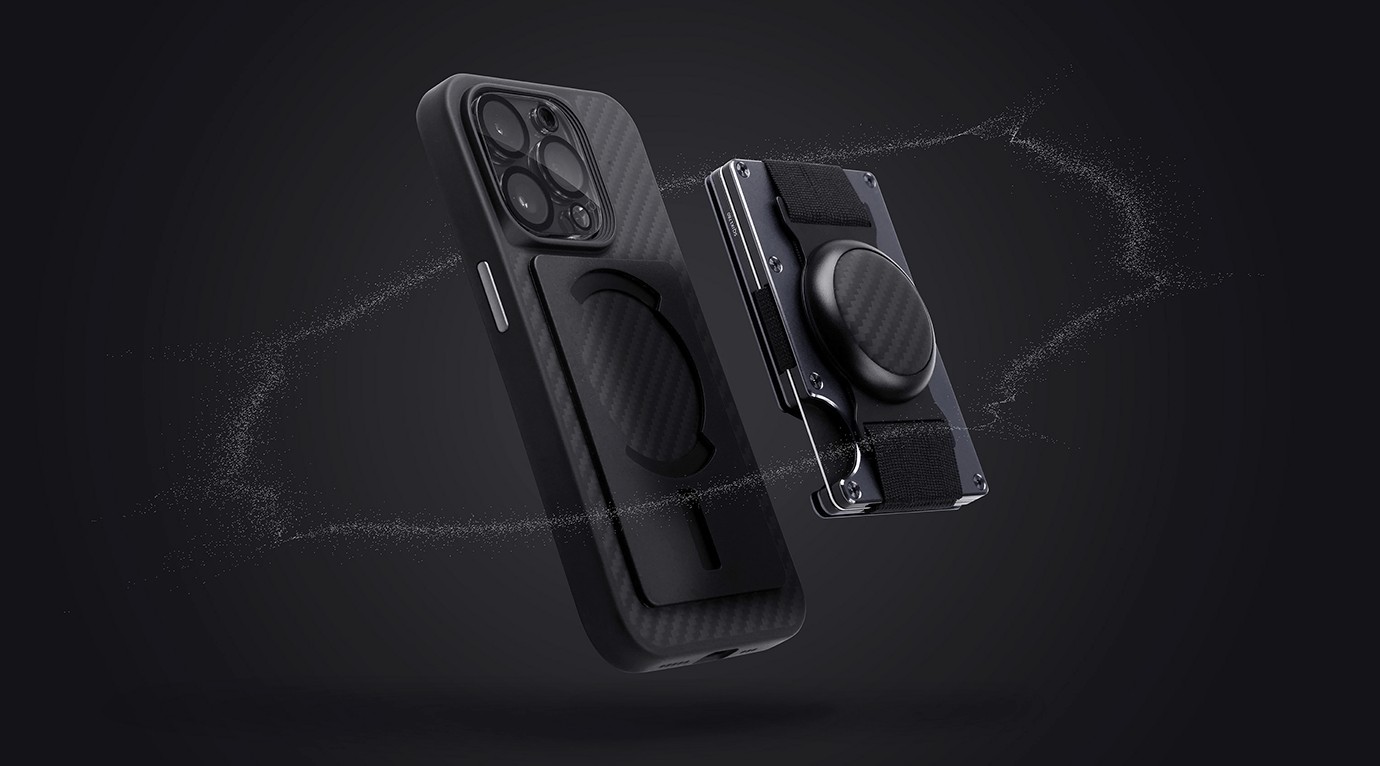
Ridge acquired EverydayCarry.com in 2022 because they wanted to expand into the everyday carry category, and EDC had spent over a decade building authority there. I joined as EVP reporting to the CEO, and part of my role was bringing that category expertise into how Ridge built and marketed its products.
When I got there, I found a company with great products and talented marketers. But something was off: their marketing didn't do their products justice, and nobody but me seemed to notice. When I looked into it, the signs were everywhere. Product and Marketing rarely communicated in a way that led to mutual understanding. Product spoke in specs and BOMs. Marketing had tight copy. But they were saying two different things. I spoke both languages and could translate back and forth, but I was doing it reactively, whenever I noticed something that could be improved or clarified across departments, from paid social to CX to packaging copy.
At first, I thought all the company needed was for everyone to get on the same page with the base context about EDC and our products that I already knew. So I started running internal product knowledge sessions where I broke down our new products into simpler terms and stories that anyone from marketing to wholesale to finance could understand. When my coworkers saw the value in it, I leaned in and brought it further upstream, baking it into our processes at a company level. That's how I gradually built a product marketing function where one didn't exist before.
The Challenge
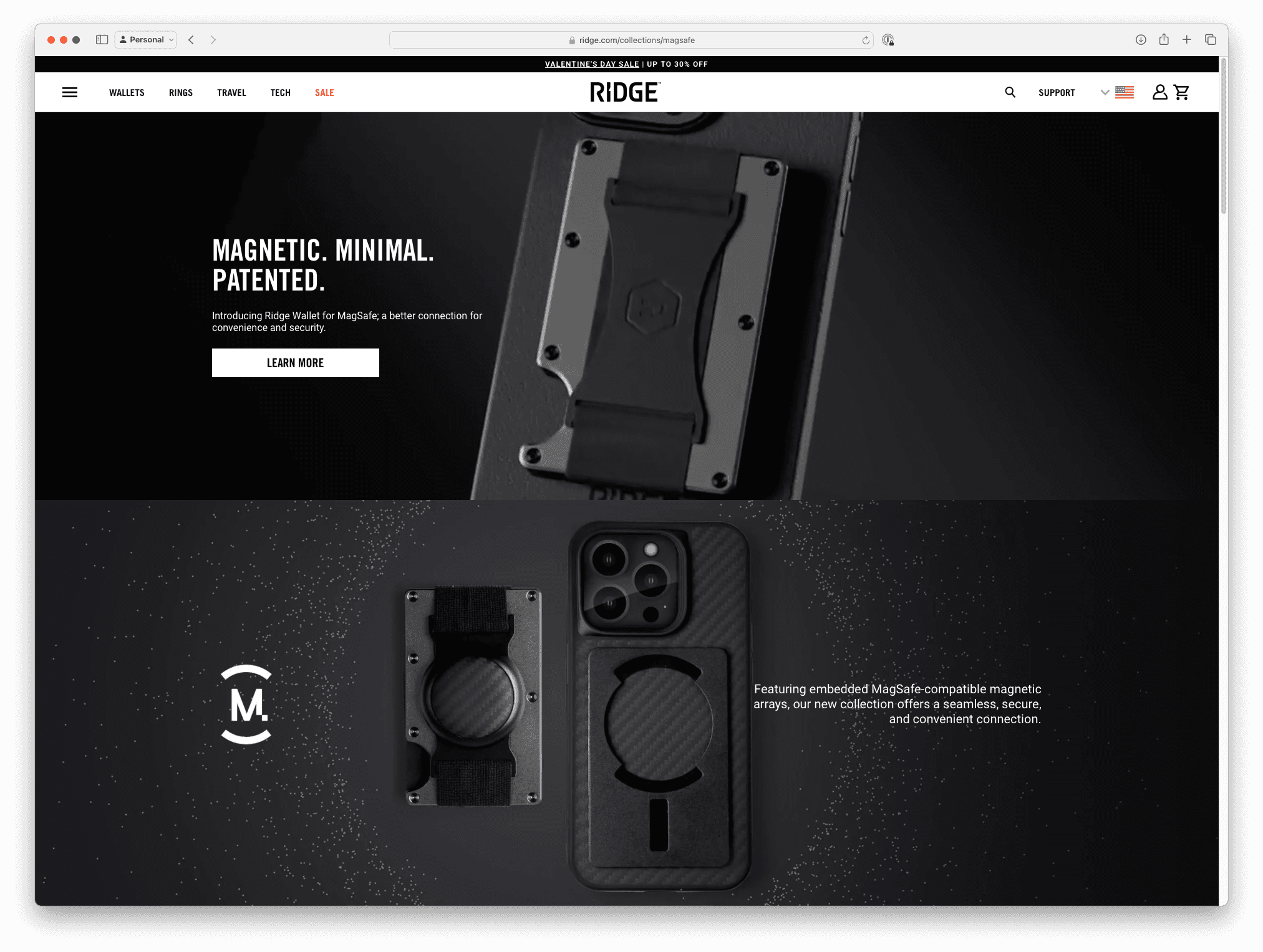
By the time Ridge wanted to launch its MagSafe collection in 2024, I was already deeply familiar with the playbooks that had worked so well for them. But having deep roots in the tech enthusiast scene from running EverydayCarry.com, I recognized that Ridge had their work cut out for them when it came to reaching that audience in a way that truly resonated.
Throwing their hat in the ring with a MagSafe wallet meant Ridge would soon be up against tough scrutiny by tech enthusiasts and gear nerds (my kind of people), who simply aren't convinced by a slick Facebook ad or YouTube sponsorship. These people need to know everything about a product before committing to a purchase. They crave detailed tech specs and watch product reviews for fun. They're the type to do their own research. It's a lot of work, but it's what builds trust. And that's what Ridge would need from this demographic if the launch were to succeed.
EverydayCarry.com was the one channel in Ridge's ecosystem that already had that trust. I'd spent 15 years building it through honest product coverage, one review at a time, for exactly this audience. The MagSafe launch needed that credibility, and it needed to show up where this audience was already spending time making purchase decisions.
Strategy
They were launching with their standard playbooks that they did best: paid ads, email and SMS, and influencer marketing. And they were trying to target the tech audiences and reach them in the right places. For example, they worked with tech YouTubers through paid integrations and sponsorships, but those just don't pass the credibility test for the more savvy and skeptical enthusiasts. If we were going to use YouTube as a launch channel, it had to be an actual product review, not a skippable sponsor shoutout in a proper deep-dive review of an entirely different product.
Ridge had their launch plan and it was already in motion. But the way I saw it, there was definitely an opportunity too important to just sit idly on the sidelines: the audience that would be hardest to win over was the one we were best positioned to reach through Everyday Carry.
My Unfair Advantage
This was my chance to flex my unfair advantage: the expertise and credibility I'd spent over a decade building. I'd create a "tech YouTuber" presentation of the launch, giving an exclusive first look and deep dive into every product in the collection, how they work together, and give a reviewer's personal opinion of the product line.
I had an idea of what information needed to be presented to do the product justice and win the skeptics over since it's the same critical review framework I put any product sample that crosses my desk through.
I also knew I had to be extremely transparent about my role at Ridge since this was being presented on a separate channel. I made a bet that acknowledging sensitivity to bias would disarm skepticism and earn trust.
Going Deep on Longform
All of this is best served through a YouTube longform video as the platform and vehicle: you can see a real person speaking with real personal opinions, with more realistic footage of the products delivered as a first look exclusive on launch day to capitalize on the immediate novelty and hype. Longform was also ideal from a distribution perspective. The video was so rich with information that it could be repurposed into shortform, embedded in emails, or have the script repurposed for ad reads or talking points in briefs.
Everyday Carry supported the launch with the usual playbooks too: website editorial, email, social media. But a website post with static images doesn't convey the complexity of a new tech product or capture the magic of a magnetic wallet's satisfying haptics. TikToks are entertaining, sure, but they're often for entertainment, not for converting $150+ purchases in a couple of taps. The shortform video we did run was either a teaser or preview leading into the longform, or more of an entertaining or humorous demonstration of the new product.
The Power of Being First
When I uploaded the video to YouTube, I knew I didn't just have the best video on the MagSafe collection. I had the first and only one. And that was huge. Everyday Carry had the first deep-dive hands-on review and could confidently claim it had the most real-world testing and experience with the product because of the unique relationship to Ridge. That built a ton of authority and credibility no other piece of content could. Being the first and only search result for something also created favorable algorithmic loops: more views reinforced placement, which compounded reach to new audiences.
And it all needed to be consistent with what Ridge was saying. I oversaw and audited messaging and copy used in PR and media decks, ads, creator briefs, PDPs and packaging copy to ensure everything was accurate. The last thing you want as a brand stepping into a new vertical, especially one as technical as tech, is looking like you don't know what you're talking about.
Execution
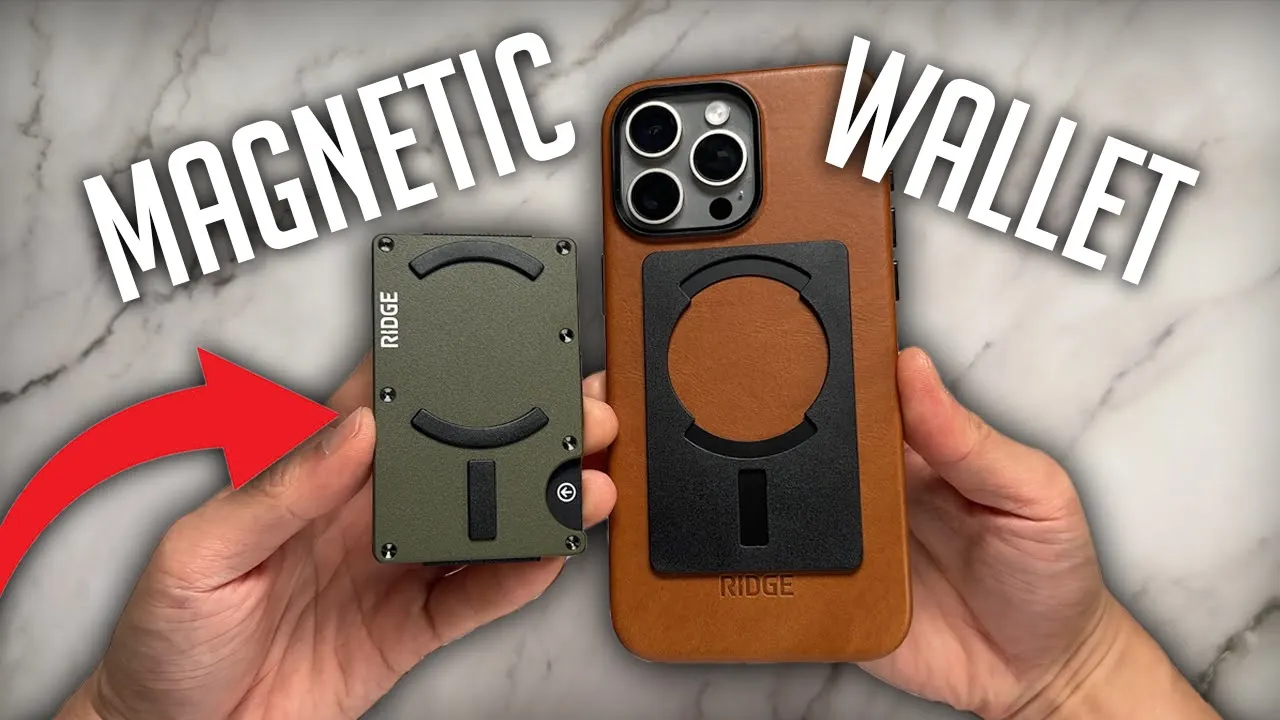
The YouTube review went live on April 26, 2024 as soon as the collection hit Ridge's homepage. It was a full walkthrough of every product in the new MagSafe line: unboxings and close-up shots of every product in every size and color and material so prospective customers could see what it looked like "in the flesh," an explanation of the new technology and showing how easy it is for new users to set up a wallet with their phone, upgrade options for existing customers to handle objections around not wanting to spend on an entirely new wallet to adopt one feature, my personal opinion and use cases, and then things to watch out for and who the product is well-suited for, all to provide a fair and truly helpful overview. I basically made a video addressing all the questions I had when I first got my hands on the collection.
That video served as the foundation for our regularly scheduled content programming for the core Everyday Carry audience: a news post on the website, a newsletter to our mailing list, and a talking point in our weekly podcast.
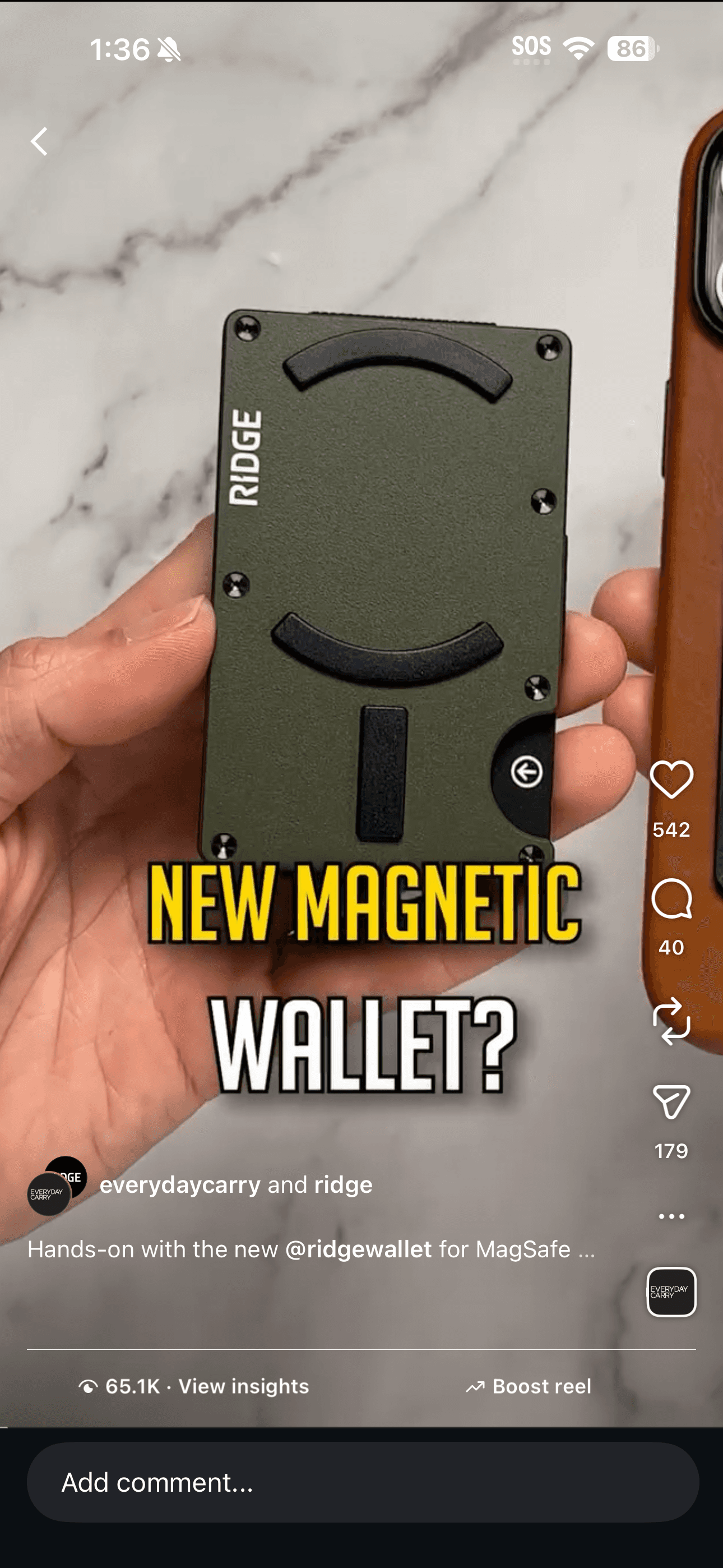
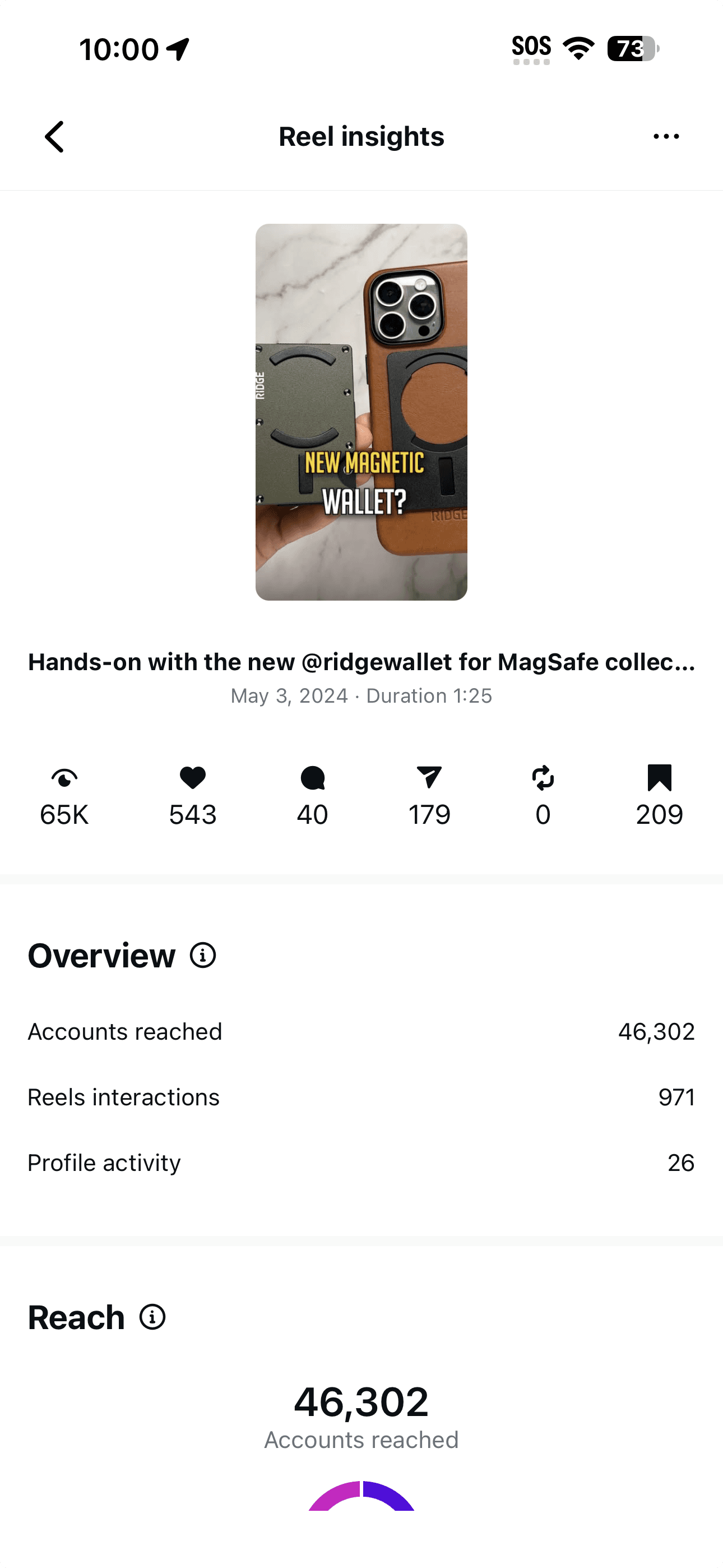
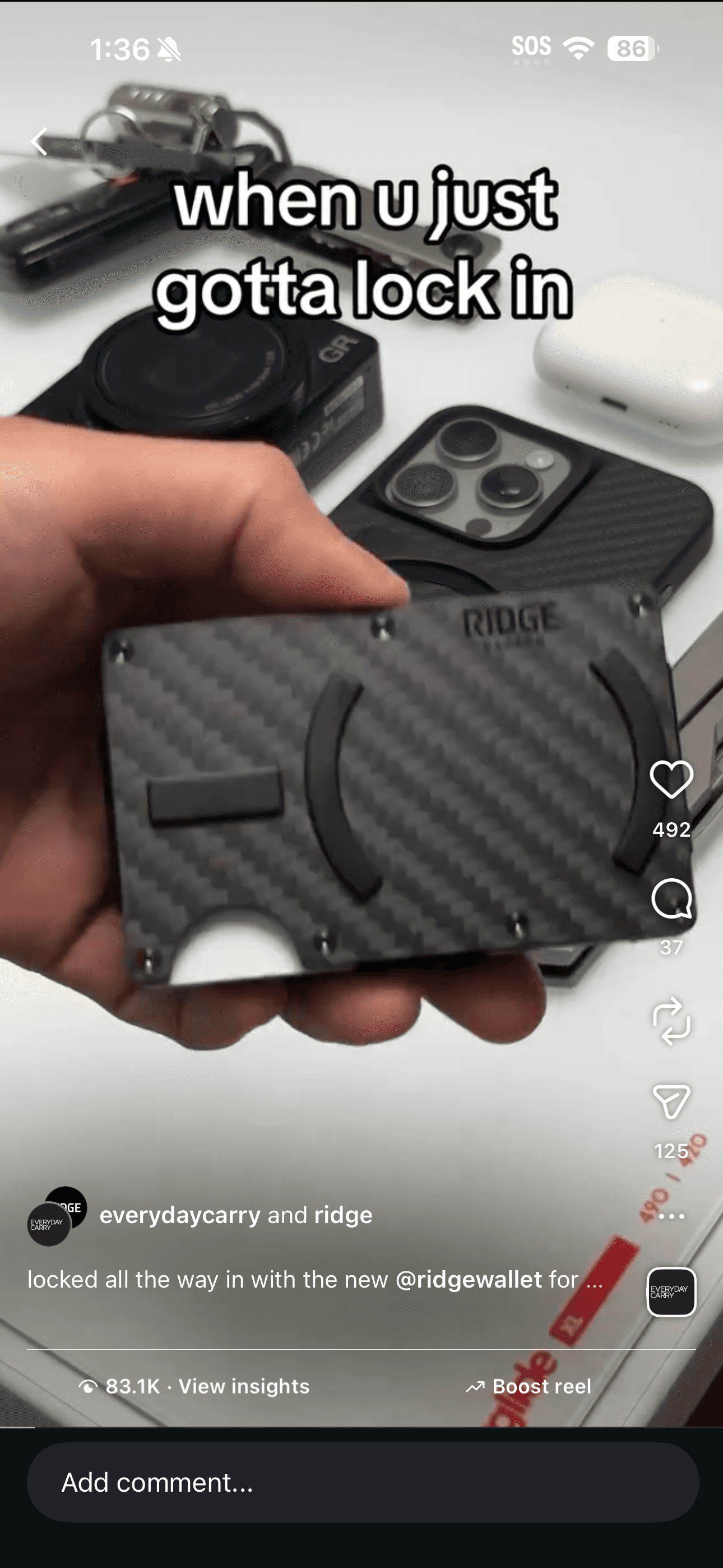
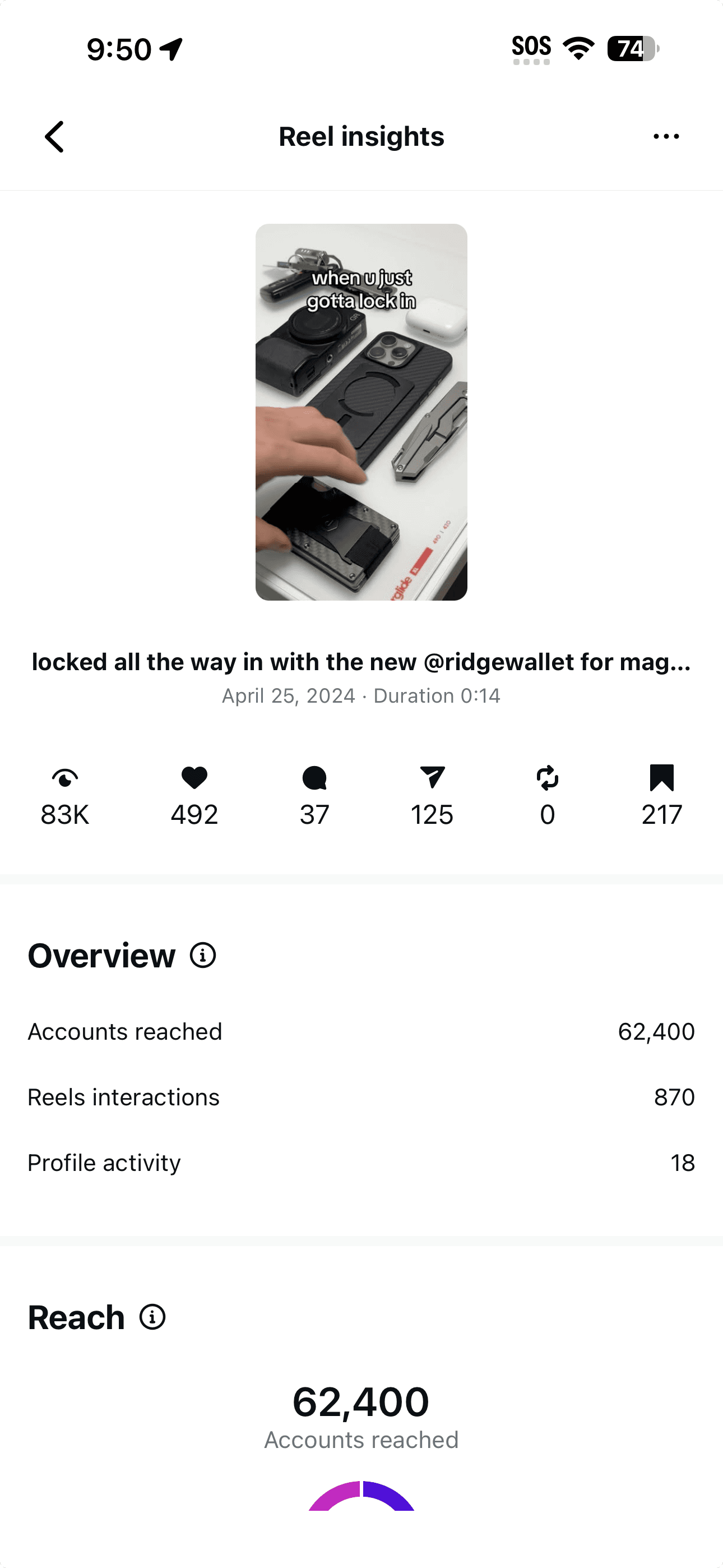
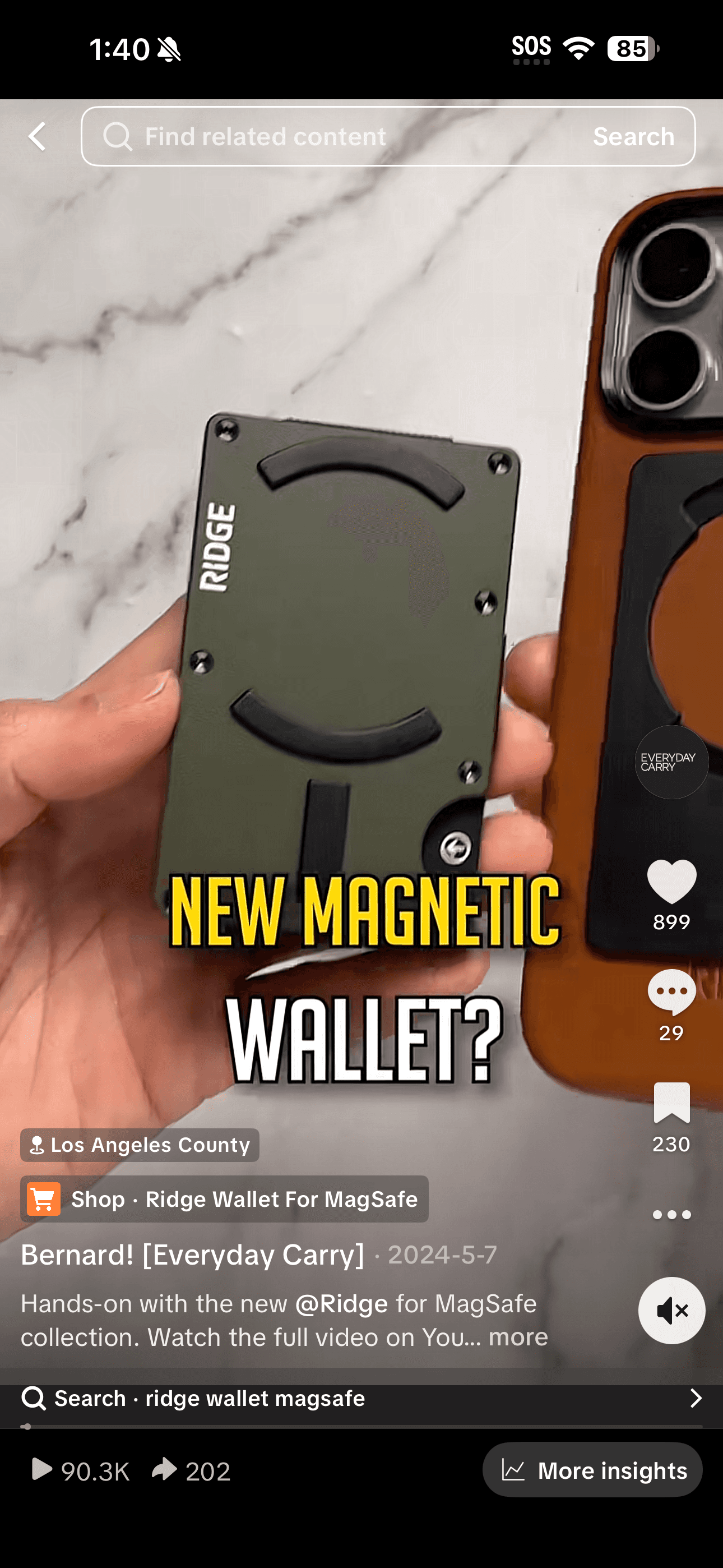
On our other social media, we followed up with two Instagram Reels. The first was more of a humorous, on-trend teaser video to build hype and intrigue. The second was a clip from the YouTube longform. Both were posted as collaborations with Ridge's official Instagram account, which signaled a proper co-sign from Ridge on my review and helped the content reach an even bigger audience. After seeing strong performance on Instagram, I reposted those on TikTok the following week to keep momentum going and generate buzz and search intent online.
I applied that same lens for all the content I would produce on the Everyday Carry side for Ridge's GTM efforts, since I had this unique perspective into what Ridge's goals were, what customers wanted as an EDC gearhead and tech enthusiast myself, and how well those two sides connected through Everyday Carry as the community authority figure bridging them together.
I could be confident that the right messaging for the product was being conveyed because I oversaw the copy docs at Ridge, I wrote the script for Everyday Carry, and I was the one on camera delivering it. I knew CX would be ready for common questions because they were questions I personally had that I cleared up through interviews with the designers and my own testing, and I anticipated them through analyzing comments sections of YouTube reviews of our competition's products.
When Ridge acquired EverydayCarry.com, it was obvious there would be some synergistic benefit when it came to PR in this space, and it was finally crystallizing with this updated launch playbook.
Results
When it comes to video content, it's really easy to conflate strong performance with high view counts. At launch, these videos didn't go viral overnight (not that they needed to), but people did watch them. And maybe more interestingly, people kept coming back to these videos months after the launch. That's how I know I made something of value: an evergreen asset that people could discover on their own through a platform's algorithms, or if they're deep in the pre-purchase journey doing their own research. With that in mind, I wanted to note that the metrics captured here are from February 2026, so they reflect the total views since the product launched two years ago.
Depth of Engagement
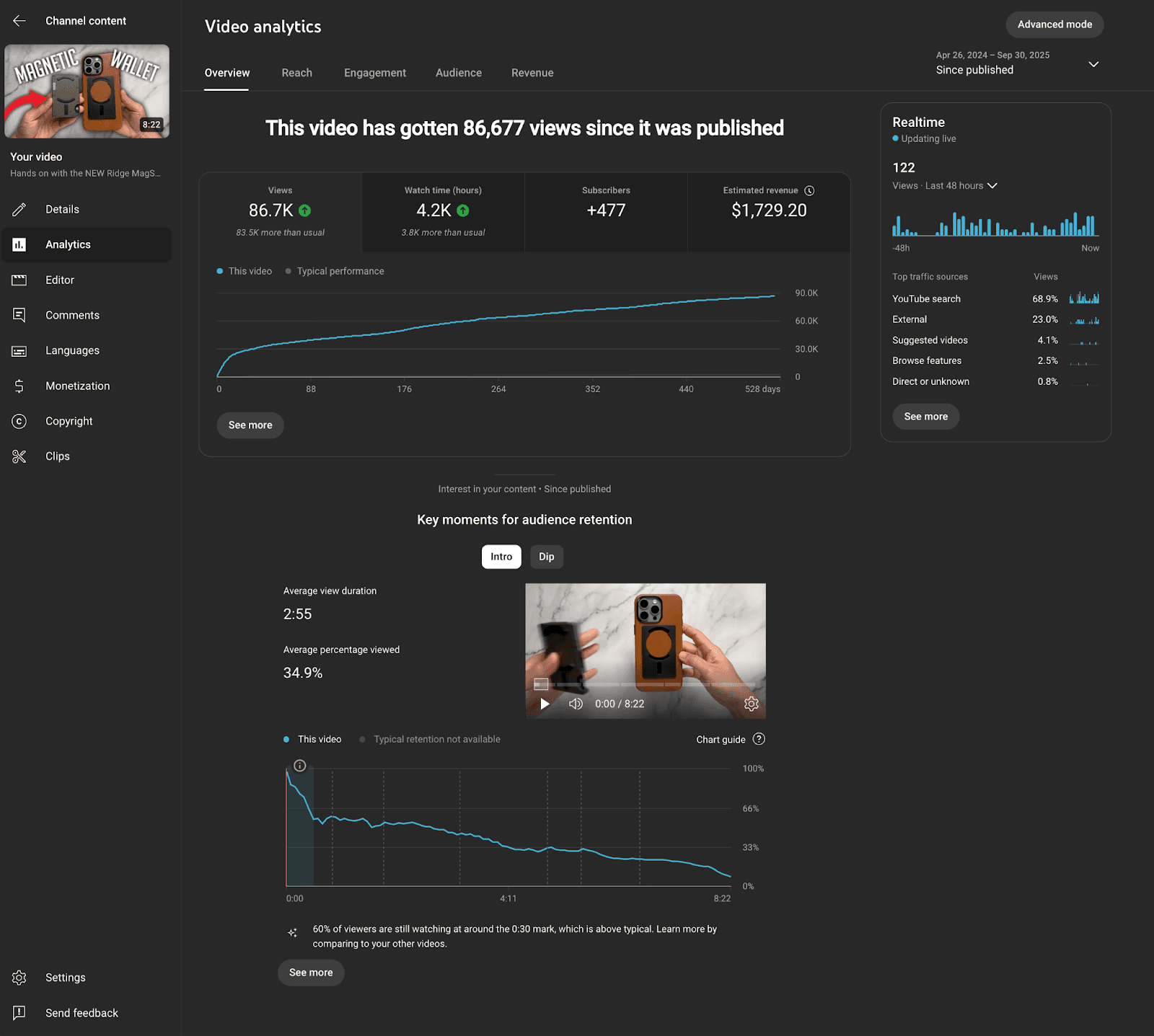
The YouTube review pulled 86,247 views with an 8.3% click-through rate. The average viewer watched for 2 minutes and 55 seconds, which is about 35% of the video. That might not sound like a lot, but for a product review on YouTube, that's someone who came to learn about the product and stayed long enough to get what they needed. Having gone so in-depth with the review and covering multiple products, it makes sense for people to skim only to the parts of the video that were relevant to them. It was engaging and informative enough to keep retention past the make-or-break 30 second mark, with over 4,200 hours of total watch time across the video's lifetime.
Search-Led Discovery
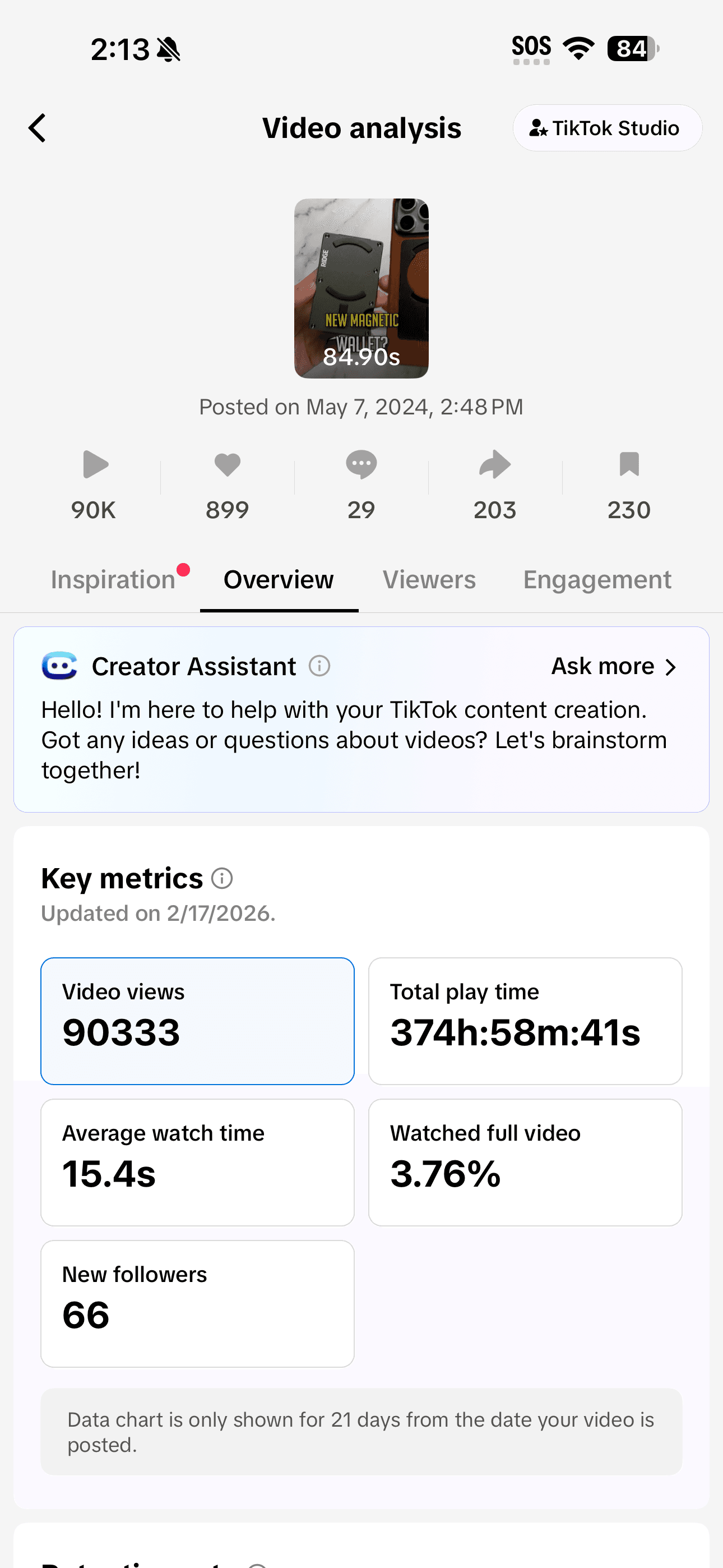
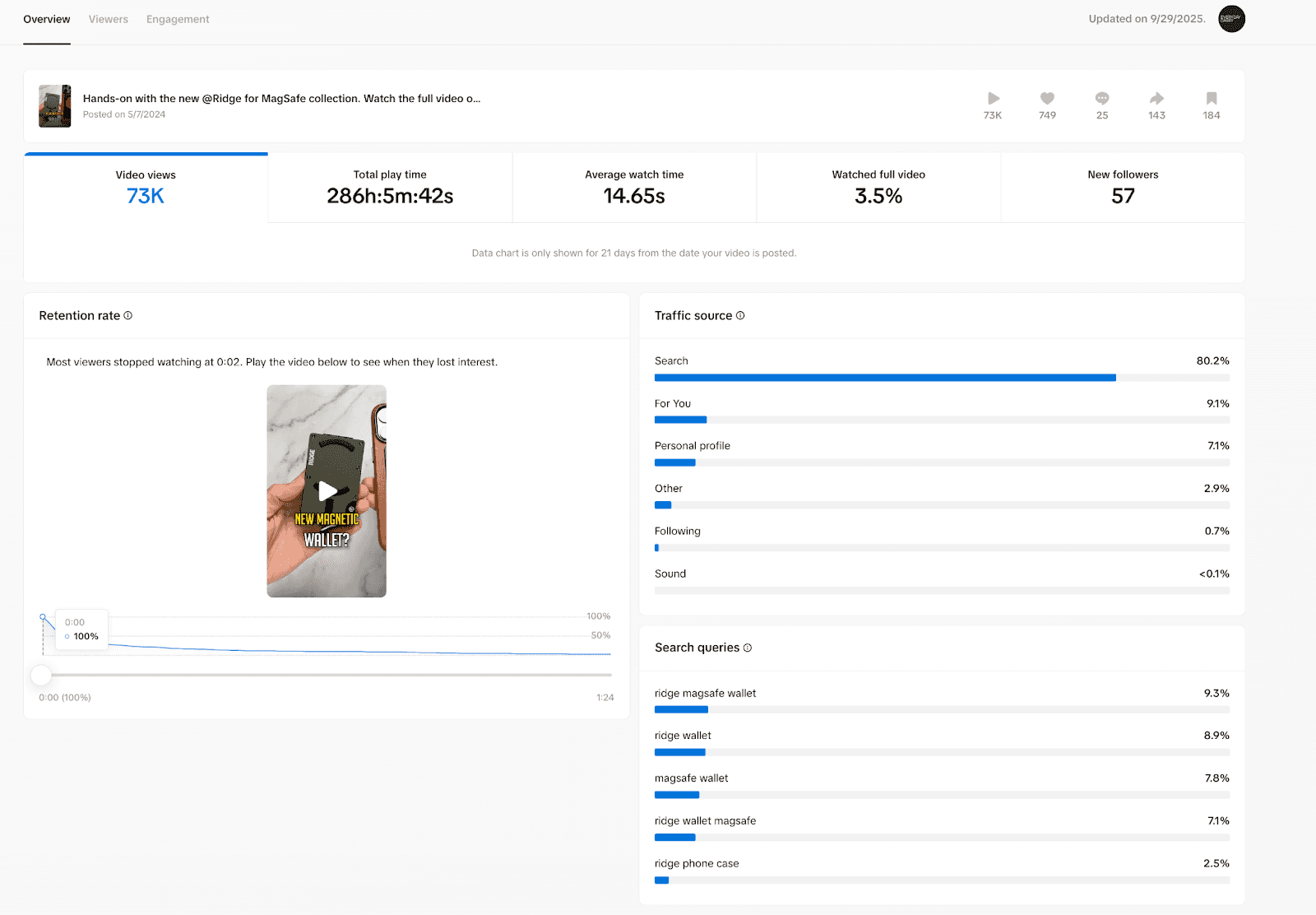
TikTok performance isn't what you might expect, but in a good way. Now, pulling 75,000 views isn't nothing. What was more interesting to me was that the majority of viewers didn't come from the For You page. 80.5% of them came from Search, meaning they found the content while seeking valuable information about the product. When Ridge's playbooks are firing on other channels, Everyday Carry's content is right there as a follow-up. That's the first-to-publish strategy paying off in real time.
Audience Growth
On Instagram, the two Reels generated 736 saves and shares combined. Saves are the metric I pay attention to on Instagram because saving a product post is about as close to purchase intent as you can get without clicking "add to cart."
The content also grew Everyday Carry's audience: 475 new YouTube subscribers, 59 on TikTok, 44 on Instagram. There's real value in that growth because these are Ridge customers becoming invested in the EDC lifestyle, and when EDC as a category flourishes, so does Ridge. That relationship works both ways.
I should also note that I don't have access to Ridge's internal sales data, so I can't draw a direct line from this content to revenue. Everything here is based on owned content performance and publicly visible signals. But the intent signals were clear, and the playbook that came out of this launch became the model for what followed.
The Playbook Repeated
I'm not the type to just copy and paste a playbook, though. The next launches were executed with learnings from the MagSafe launch, mixed with bigger swings and bolder bets on what I knew worked for Everyday Carry that I could try exposing to the Ridge audience.
Brass Collection
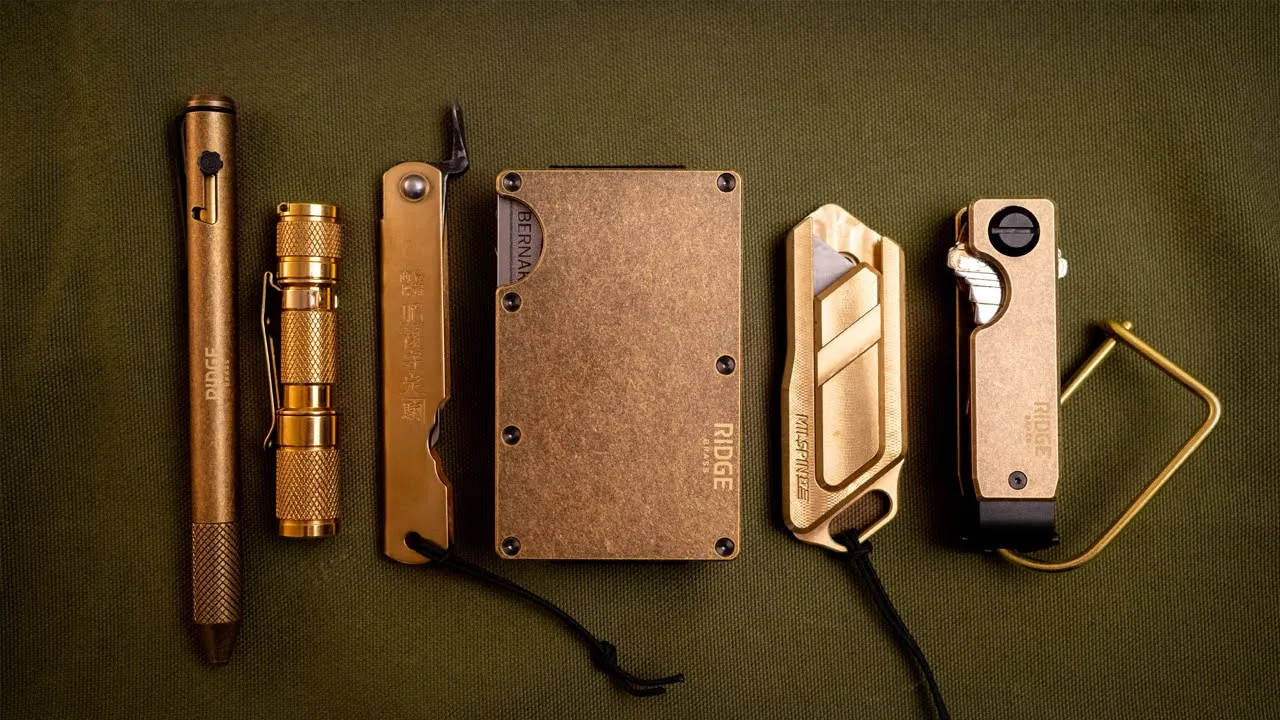
The Brass Collection launch leaned into a more "native" content approach that EDC content does so well. While the MagSafe collection video focused purely on Ridge-branded products, I went for a more realistic and relatable setup for the Brass Collection.
I didn't make Ridge's new brass items the hook or premise of the video. Instead, they were simply supporting actors in a larger cast of brass products, with the format of the video exploring brass as a material and trend within the EDC community. That way, the audience felt like they were learning about something deeper and more meaningful—practical technical knowledge about material properties, history and culture within the EDC scene, and new products vetted by an authority (and a few of them happen to be from Ridge)—rather than being blatantly advertised to.
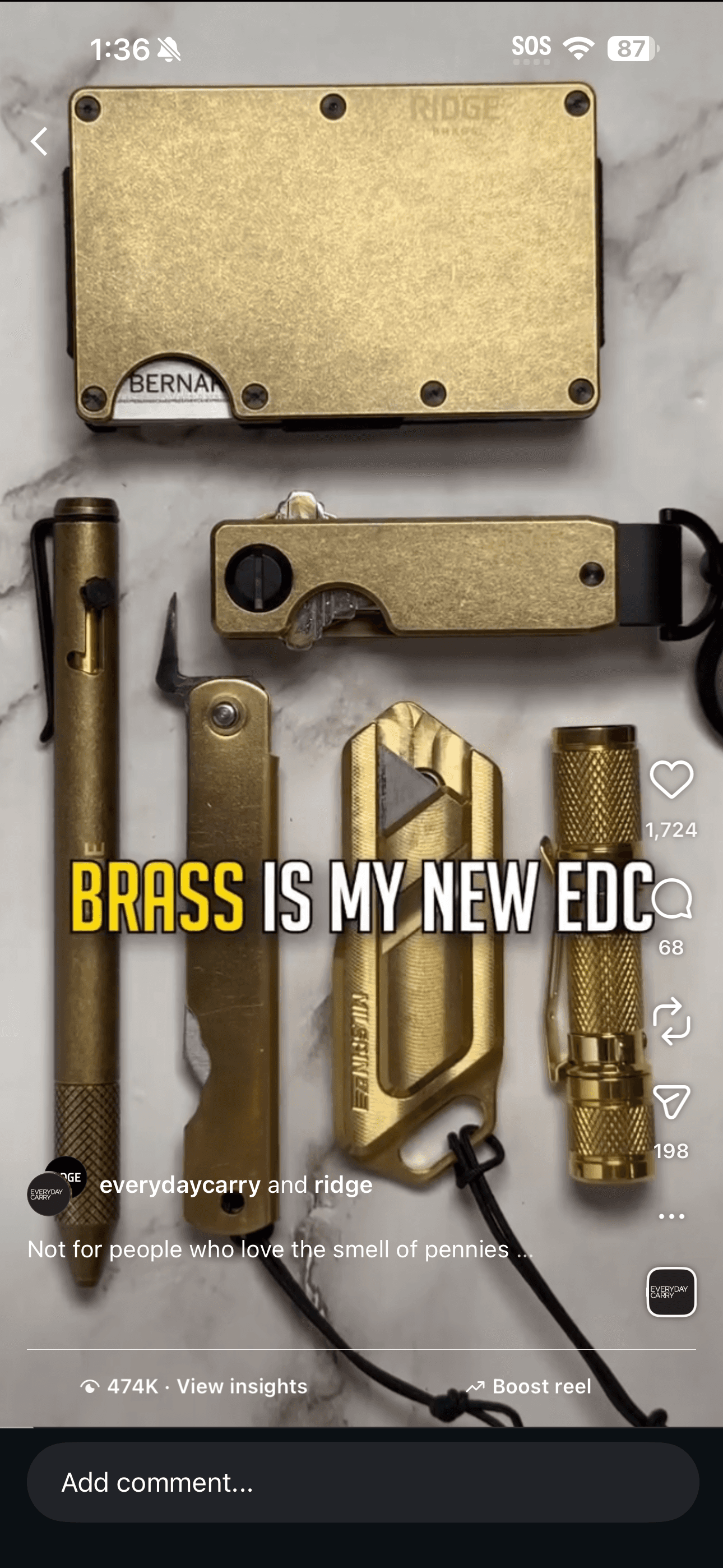
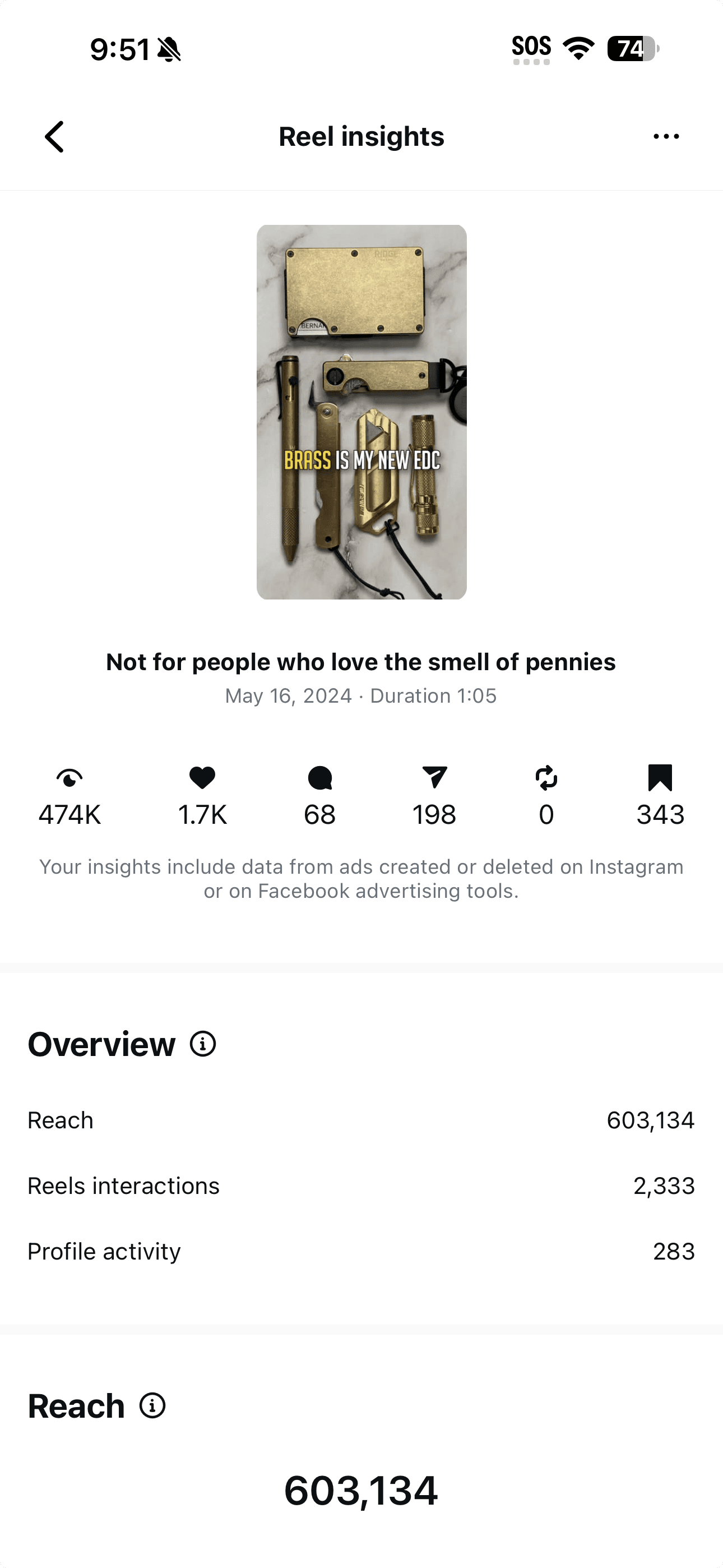
It really resonated, and the numbers proved it: Instagram Reels pulled 474,239 views with 544 saves and shares. The YouTube longform got 10,600 views at a 6.5% CTR with 561 hours of watch time, and 41% of that traffic came from YouTube Search.
Dessert Warrior
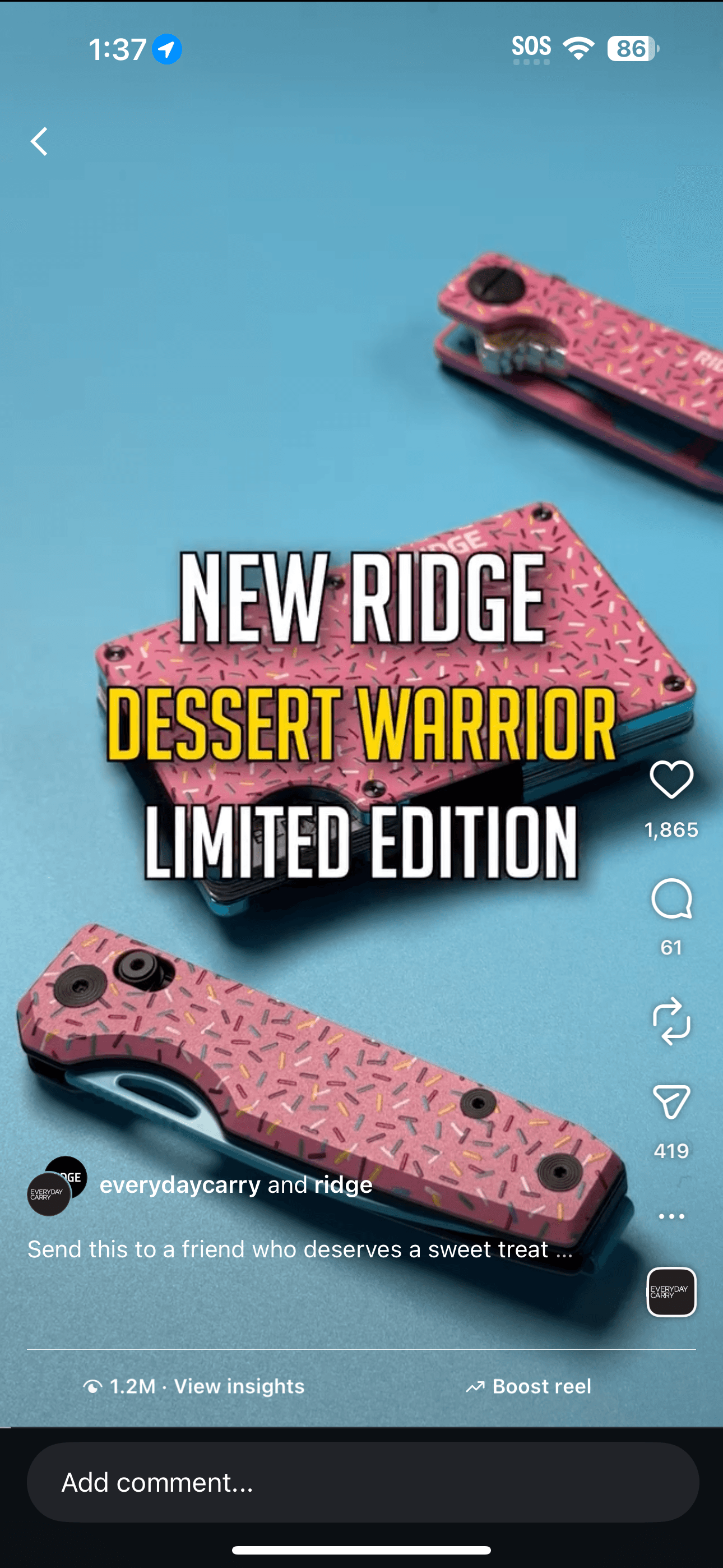
The Dessert Warrior drop was a different kind of opportunity. Depending on who you ask, "Dessert Warrior" is equally a meme and an IYKYK flex in the EDC community. No matter how you feel about knives and tools that look like one of Homer Simpson's most sugary vices, the Dessert Warrior motif signaled credibility in the EDC community, almost like a shibboleth. It's a different challenge to take something with cultural significance that isn't entirely legible and bring it to a larger more mainstream audience who isn't in on the joke. But we saw the opportunity, I spoke the language, and I had the connections to make it work.
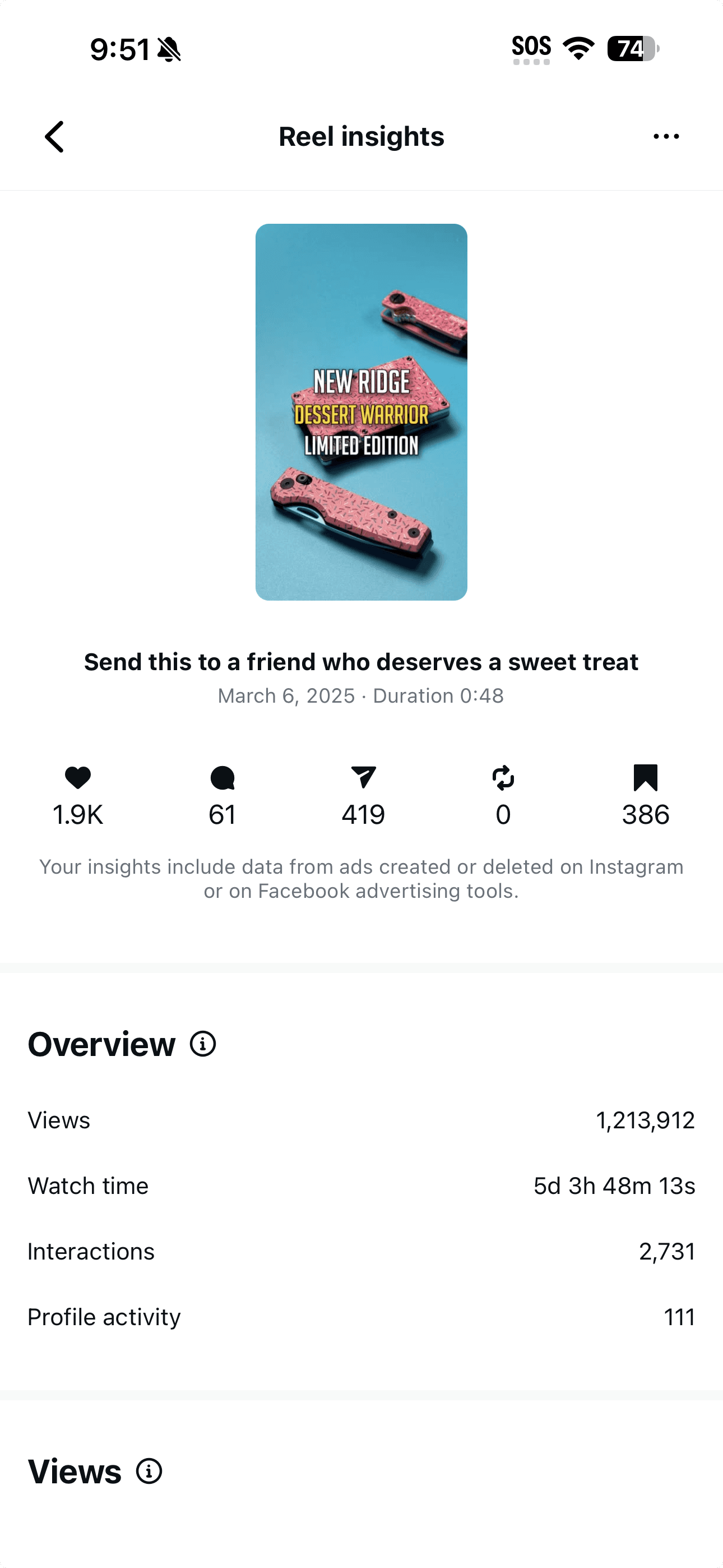
Through my contacts from reviewing knives on Everyday Carry, I connected Ridge with BladeHQ who own the Dessert Warrior license and started the whole trend. The Instagram Reel we whitelisted from the Everyday Carry handle reached 1.2 million views. For context, Ridge's own Facebook video for the same product drop pulled 286K. After that social push, the Dessert Warrior collection sold out completely.
Where This Led
These examples are just the beginning of the GTM efforts I'd then drive for Ridge, especially further down their tech expansion roadmap. At a company leadership retreat in September 2024, off the success of MagSafe wallets and more complex, feature-packed collections like luggage and EDC gear, the board and C-suite identified the tech enthusiast market as a huge untapped growth segment. They needed someone to lead the strategy to win over the market they still haven't managed to crack, even after bringing on one of the biggest tech YouTubers, MKBHD, as Chief Creative Partner. It was a big bet, and they bet on me to lead the charge, unanimously appointing me as the strategic champion to drive this company-wide initiative.
There were other cross-functional initiatives identified during this retreat, so I had to carefully design a dynamic and collaborative strategy for the next year. Q1's milestone achievement would be to understand and define this "tech" customer through research and persona building, Q2 would test positioning and messaging to these personas across paid, landers, PDPs and influencer partnerships. Q3 was focused on iterating and testing in new surfaces and channels, such as wholesale to capitalize off of the yearly new iPhone announcement. Finally, Q4 was for taking learnings and setting up into the next year through new IPs, licensing, and collaborations after a year of establishing credibility and brand recognition in the space.
Through Q1 I went deep in trying to discover and understand our ICPs. I had worked with our retention team and data warehouse to build segmented customer profiles, then used those to design and run a 1,500-response customer survey to establish demographics and psychographics, and conducted qualitative interviews alongside my CEO with MKBHD's team to gather insights on what they've learned as authorities in the consumer tech content landscape. When the end-of-year data came in, it confirmed what we were seeing: the consumer tech category had grown to account for $12M in Ridge's annual revenue, up 41% year-over-year.
At the same time, I was laying the infrastructure for an in-house product education video content engine for Ridge's owned channels similar to what I had done on the Everyday Carry channels for all future launches. Imagine hands-on, deep-dive video overviews for every SKU, starting with Ridge's super successful power banks as the first major piece, then scaled to cover future launches and backfilled for the existing catalog. I consulted with the CEO, the Chief Design Officer on the Product team and the Creative Director on the Marketing team to nail down the approach and get it approved. This was the natural evolution of the product knowledge work I established when I first joined. I had created an internal culture of deeply understanding our products, now it was time to bring that to the customer through the content they were missing on Ridge's own channels.
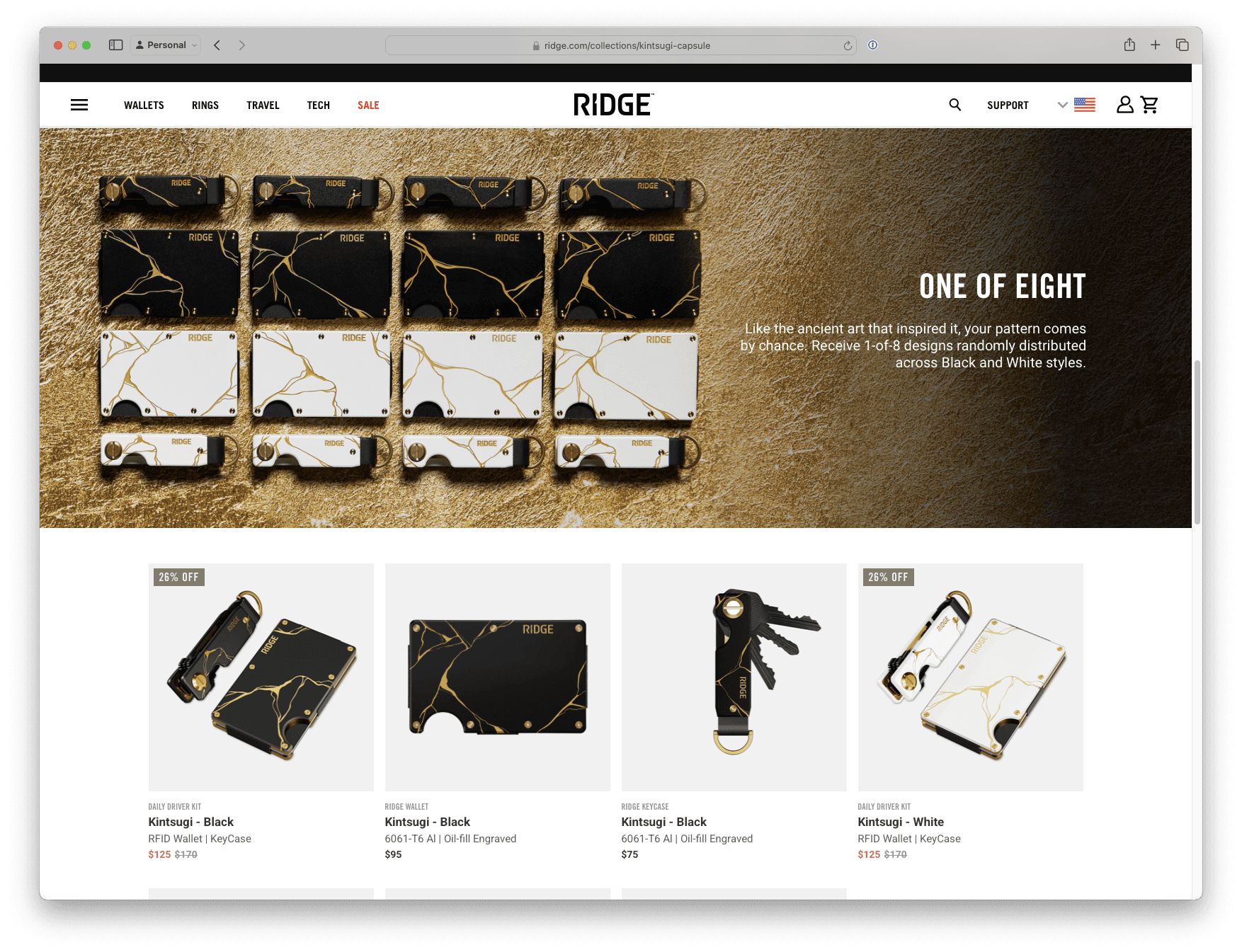
The power banks launched in late March 2025. My first Ridge wallet design I concepted and positioned, the Kintsugi collection launched as an instant classic on April 1st, 2025. Just a few days later, on April 3rd, I got laid off. I think Ridge had to respond to the new tariffs on trade policies that directly and significantly impacted their business model.
Coming Full Circle
Sometimes I think that the end of my career at Ridge was an interruption of the beginning of my greatest work. Looking back though, it wasn't an interruption at all. It was a continuation of what I had always been doing throughout my entire career.
From the first internal product knowledge lesson I gave, to the last launch during my time there being the first wallet design I ever concepted, I was trying to get others to realize how great these products were in the same way it was so obvious to me.
Understanding a product and believing in it, then sparking that same belief into others, is the skill I'm grateful to have honed through this experience and brought with me to the next chapter in my career.
Notes
YouTube, Instagram, TikTok metrics from owned analytics captures dated February 2026, reflecting cumulative performance since launch.
Internal Ridge sales data was not available for this case study. All results are based on owned content performance and publicly visible signals.
Whitelisted content was distributed from the @everydaycarry handle. Spend figures are not included.